AN OVERVIEW BY CUSHMAN & WAKEFIELD RESEARCH (Originally published: April 2010; Updated: August 2010)
In a gradually recovering economic scenario, backed by a revival in investment and private consumption demand, India’s real estate sector has witnessed increasing business activity in the first half of 2010. The housing sector led the way to recovery since the third quarter of 2009, with price stabilization and a lower oversupply percentage in comparison to other sectors. Recent housing price rises may be attributed to the realization that extreme pessimism during the last downturn period was unwarranted, leading to bargains and opportunities that were exploited by astute investors. Residential demand in India still has the potential for further growth, particularly in the mass-market segment as cities grow to accommodate an increasingly migrant population base. Most major markets across India are currently witnessing fairly high urbanization rates – which are as yet considerably low in comparison to mature global economies.
Real estate markets in India have been continuously evolving since the mid 1990s in response to a host of changes in the business environment. In the past few years, the majority of demand in the primary growth sectors has been created by the IT software and IT enabled services sector. The growth of the knowledge economy has brought with it profound changes in occupier profiles and demands, leading to the burgeoning of residential markets across various cities.
While Mumbai, Delhi and Bangalore have been the traditionally favoured destinations, over the past five years emerging centres such as Pune, Hyderabad, Chennai and Kolkata have also become a part of the business race due to their ability to cater to the needs of the new economy in terms of operating cost advantages, quality of urban infrastructure, scalability and low cost, quality real estate developments, city governance and business transparency, to name a few.
INDIA ECONOMIC OUTLOOK
- Economic growth is projected to be around 8.75% in 2010 and 8.50% in 2011, supported by rising private demand
- Consumption trends are likely to strengthen as the labour market improves
- Investment is expected to be boosted by strong profitability, rising business confidence and favourable financing conditions
- The persistence of high inflation rates and the wide, albeit narrowing, budget deficit pose risks to the nation’s overall economic outlook
- With faster recovery in Indian markets, global property funds are getting aggressive once again
Increasing property prices, steady mortgage rates and flexible payment plans have lead to an increase in residential demand, resulting in increasing enquires and even better conversions. The residential market has seen improving sale activity, primarily in cities such as the Delhi National Capital Region (NCR), Bangalore, Hyderabad, Chennai, Pune and Kolkata in the second quarter of 2010.
In the forthcoming section we discuss various trends related to residential real estate prevalent in these cities.
Some of the new established corridors and emerging markets are highlighted below:
DELHI NATIONAL CAPITAL REGION
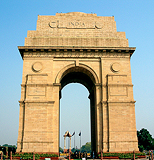 The Delhi National Capital Region (NCR) includes New Delhi and the satellite townships of Gurgaon, Noida, Greater Noida, Ghaziabad, and Faridabad. A cosmopolitan city with the highest per capita income in India, the NCR has witnessed incredible real estate growth over the last few years.
Despite suburbanization, South and Central Delhi (traditionally favoured locations), known for their esteem value, are still perceived to be the most posh areas of the city. The perception of these areas is being driven by factors such as well developed economic infrastructure, environment, peaceful surroundings, good neighborhood profiles, and the proximity to clubs, hotels, leading schools, government offices etc. As a result, these locations continue to be indemand, particularly amongst the expatriate and diplomatic circle. These locations are some of the expensive across the NCR, and sale values for premium properties range from Rs. 25,000 to 60,000 per square foot as of August 2010.
The changing skyline of luxury housing in NCR is reflected in the emergence of high end luxury products in the suburban locations – predominately Gurgaon and Noida. Changing demographics, increase in disposable income and the growing aspirations of the upper middle class have encouraged the developer community to bring in products such as beautifully designed villas with their own private swimming pools, sprawling penthouses with panoramic views and private terrace gardens, and buildings with facilities such as helipads, electronic security systems, and state of the art clubhouses. Till recently, this particular segment was associated either with farmhouses or sprawling bungalows, like those in Central Delhi. The availability of luxury apartments has ensured a wider audience for such product. As a result, there have been several launches catering to the niche segment in recent years by prominent developers like Emaar-MGF, DLF and Ireo.
In the future, the NCR market is likely to continue to support the increased appetite for suburban properties in the Rs. 1.5 – 4 crore value range in Noida and Gurgaon. The fast absorption of such stock during the pre-launch period has been another trend in the NCR with almost 60-70% of total stock being offloaded during such launch periods. Traditionally, where people preferred to pay only after seeing the end product, the market has now undergone a huge transition in mindset where end-users/investors are willing to entrust money even before the launch of the project, based on developer’s track record. However, following the downturn, investors and end users are more skeptical, and for the most part, Grade A developers like DLF, Raheja and Unitech are witnessing strong absorption in their projects.
The Commonwealth Games have also impacted the residential segment in the NCR, with upgradation and addition of rooms across various locations such as Jasola, Vasant Kunj and Akshardham. With infrastructure facelifts and derived demand for these locations, capital values have escalated as the projects draw near to their completion dates.
BANGALORE
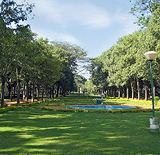 Apart from being labelled the Silicon Valley of India, Bangalore has also emerged as one of India’s medical tourism destinations. According to a survey conducted by Mercer in 2009, Bangalore topped the list of Indian cities in the ‘quality of living global city rankings’ among 215 world cities. Being an established IT and IT enabled services destination with an ample talent pool, availability of good real estate options, and a strong base for research and development, Bangalore has witnessed significant growth in the residential market over the last couple of years as compared to other metropolitan cities in India.
Increasing disposable incomes and a growing migrant population employed in the IT and ITES sectors are the key demand drivers for the city’s housing sector. Historically, Bangalore’s local population always looked at occupying independent houses, and an apartment culture was not in vogue. However, over the last five to seven years, thanks to the IT boom and a steep increase in land prices, Bangalore has witnessed an increasing migratory population and a local population willing to look at investing in apartments.
While new developments have come up in almost all localities in Bangalore, certain micro-markets clearly stand out. The highest stock generation has been in the South and South East of Bangalore. Within these zones, Bannerghatta Road and Sarjapur Road have been witnessing a large proportion of the construction activity.
In the coming three years, the South and East Bangalore micromarkets are likely to witness approximately 10,000 units each being commissioned. The upcoming micro-markets of North and North West Bangalore are also expected to see increased residential developments by 2013. The established markets with limited land parcels are expected to see minor launches in the coming years. With the end user market gaining momentum over the last two quarters, the city’s vacancy rate is likely to drop, and capital values in select micro-markets likely to strengthen. The rental market, on the other hand, has been stable for a longer duration with limited fluctuations. With an improving economy and stabilizing job market, established micro-markets are likely to witness some increase in the medium term. Developers, meanwhile, are focussing on completing ongoing projects, and are not very aggressive about new launches – unless they see potential demand in a location where they have land banked. The coming festive season is not likely to witness significant launches, with developers likely to be conservative about new launches.
MUMBAI
 After witnessing a slowdown in demand for most of 2009, Mumbai, referred to as the commercial capital of the country, has witnessed some revival in demand in first half of 2010. Widely recognized as one of the most expensive residential markets in India for premium housing, most developers are striving to provide developments with international quality standards and some of the most reputed developers are offering designs which boast of earthquake resistant structures, state of the art fire-fighting and security standards, home automation, ample car parking spaces, swimming pools, gardens and health clubs.
The demand in high end residential market continues to remain buoyant, which has put some upward movement on values. Almost all the construction activity in the city is scaled towards vertical development, as parcels of land tend to be relatively small, scarce and expensive.
Some of the demand drivers for the market include easy access to capital, higher disposable incomes, improvement in the economic scenario, and, most importantly, aspirational buying towards a better quality of life. Locations across the city have witnessed significant appreciation in property prices ranging between 10-25% over the last 12 months. However, in the recent past, that is the last three months, prices have started to stabilize.
The extensive development and re-development of commercial space in Lower Parel, Bandra-Kurla, Andheri East, Goregaon, Malad and Thane has seen large spaces being committed by companies in the financial, banking, insurance, IT and ITES, and media and consulting sectors. As a result, the neighboring residential pockets have witnessed extensive construction activity to cater to the demand for residential apartments both on leasing as well as on outright purchase. On the central line corridor Kurla, Ghatkopar, Vikhroli, Kanjur Marg, Bhandup and Mulund continue to see unlocking of industrial land for mixed used development for popular as well as premium housing for the middle segment, with a lot of organized retail developments.
The redevelopment of erstwhile mill lands in Central Mumbai has led to extensive construction activity that is currently underway. The large upcoming residential supply in this precinct is likely to bring stability to prices.
South Mumbai has also witnessed some new construction activity, although due to scarcity of land, it comes at a price. The demand for quality options in this area far exceeds the supply, thereby prices have appreciated significantly.
PUNE
 Ranking amongst the top 5 Indian cities for IT exports, Pune is also home to various students and retirees. Pune has long been considered a satellite city to Mumbai. Now, with the advent of the high speed expressway, Pune is virtually a suburb of Mumbai offering an excellent talent pool and competitive real estate solutions. Consequently, the city has evidenced significant growth through the year. While Pune continues to experience significant challenges due to its abysmal power supply situation, recent initiatives to augment international flight connectivity have to a certain extent made Pune a more accessible city. Along with the IT and ITES sectors being the main growth drivers, the demand in Pune has also been sustained by people living in Mumbai who are investing in the residential sector.
Prime locations such as Kalyani Nagar are witnessing a tremendous levels of residential development activity. Some of the developers who have been instrumental in putting up large-scale housing projects include Panchshil, Lunkad, Kumar Group, Karan Group and Karia. Locations such as Viman Nagar Kondhwa, Kharadi, Wakad, Balewadi and Baner are also experiencing huge amount of development.
The supply of residential stock in Pune significantly outweighs the demand as many developers have stepped up developments in light of an improved economic situation. The Pune market is also experiencing a large supply of semi luxury and luxury apartments, particularly in areas like Balewadi, Baner and Wakad. Further, the upcoming IT parks in the suburbs have triggered significant stock additions in the area.
In the coming festive season, substantial stock addition is expected in the suburban and peripheral locations of Pune. Even though demand is expected to remain stable, the large upcoming supply and existing vacant stock will keep values under pressure. Prices are expected to remain stable over the next year.
KOLKATA
 Kolkata has been witnessing a major transformation in its real estate landscape with developers and builders rushing in to fulfill the residential, commercial and infrastructural gaps. With the IT, ITES and BPO sectors slowly finding a desirable destination in the city, the intellectual capital of India is increasingly becoming more cosmopolitan as it draws on a manpower pool from across the country.
The West Bengal government has been offering various sops to entice Multi National Corporations to evaluate Kolkata for their second phase of growth in India. Developers as such are focusing on creating high quality developments to meet the expectations of the MNCs. Primarily peripheral locations are witnessing huge developments which have led to concomitant residential developments. In addition, new satellite towns are mushrooming in the vicinity of commercial establishments.
The city which had until now witnessed centralized growth, with the CBD located in Central Kolkata, is now seeing a decentralized growth pattern, with the upcoming new satellite towns of Salt Lake and Rajarhat. With a cost of living comparatively lower than other metros, Kolkata also has the potential to offer cheaper real estate options.
New Town (Rajarhat), which is being promoted as an IT hub in the East of Kolkata, has become a hotbed of real estate investments. A series of IT park projects running into Rs. 1,000 – 1,500 crore have already been announced, and a host of peripheral projects in the entertainment and residential spaces have also been lined up to complement them. Among the major real estate players that have made an entry into Rajarhat are DLF Universal, the Unitech Group, KeppeLand and RMZ Ambuja, among others.
The city has witnessed major launches during the year, and locations like Central and South Kolkata has seen the development of some landmark residential projects. The overall trend in the city is positive particularly with respect to the pricing of properties across various segments. The rental market is, however, exhibiting a stabilization trend. With the festive season round the corner, the city is likely to continue with the positive outlook in the near term.
CHENNAI
 Chennai, the largest city in South India, is known for its efficient infrastructure and has seen sustained real estate demand – largely the result of growth spearheaded by a spurt in the knowledge sector comprising the IT and BPO led businesses. Many of the IT companies that have a presence in Bangalore maintain a secondary or tertiary presence in Chennai. One of the main considerations for this is the proximity to Bangalore, which makes disaster recovery and the management of resources easier.
Chennai has also witnessed the entry of financial giants such as the Government Investment Corporation of Singapore’s investment in the residential market, driven by the relaxation of FDI norms in real estate. The market is performing in line with the national trend of increasing end-user investments in housing. As companies grow and expand to suburban areas, a corresponding growth in the residential segment has followed. The growth is especially strong along GST Road and Rajiv Gandhi Salai, with the presence of pan Indian developers such as DLF, Hiranandani, Unitech, L & T and Mahindra Lifespaces setting up various projects and townships across the city.
The residential market will likely continue to see a lot of activity in the coming festive season, both in the sale and leasing segments. The market has seen slight increase in prices especially in the peripheral regions due to the launch of new projects. A stable increase in prices can be expected in the foreseeable future. The IT and BPO industries, which have led to a significant migrant population in the city, and have become the prime drivers of the real estate market in Chennai, are driving the demand for apartments and highrises which was previously negligible. High-end projects continue to be developed, although after the downturn and stabilization of prices, developers are focusing on launching more mid-end projects.
For additional information on any of these properties or to arrange a viewing, call
us at the numbers listed here or email [email protected]. You may also fill out this
online form.